More and more people ask about roses that “last for years.” They exist, they aren't plastic and they aren't the same as a fresh bouquet. Here's a no-frills comparison so you can choose wisely, not just by what looks prettiest in a photo.
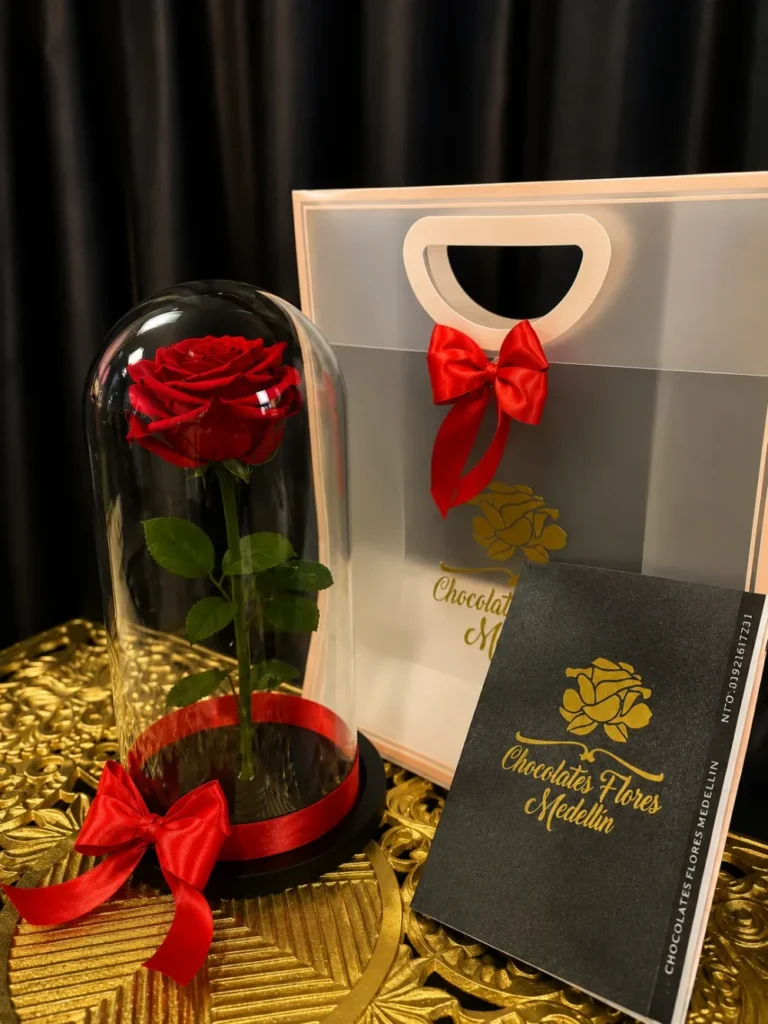
What a preserved rose is
It's a natural rose, cut at its best, whose sap is replaced with a solution that preserves its texture and color. The process is done with the freshly cut flower: the stem is immersed in a glycerin-based mixture that travels up its channels and gradually takes the place of the water. Then the color is applied, because the process bleaches the petal.
The result is neither dried nor artificial: it feels soft to the touch, almost like a fresh rose. What it loses is its fragrance and its ability to keep opening: it stays exactly as it was the day it was treated.
How it differs from a dried rose
They're often confused, but they're nothing alike. A dried rose has lost its water: it becomes stiff and brittle, its color fades and it crumbles when touched. A preserved rose keeps its flexibility and vivid color. If the petal crackles when you gently squeeze it, it's dried; if it gives like a fresh petal, it's preserved.
How long each one lasts
- Natural: seven to ten days with good care; less if exposed to sun or heat.
- Preserved: one to three years, with no water and no care, as long as it's kept out of direct sunlight and high humidity. Under a glass dome it lasts longer, because it's protected from dust.
Over time, a preserved rose's color fades a little, especially in light tones. It doesn't wilt: it fades, and very slowly.
What each one gains and loses
A natural rose has something a preserved one can't replicate: the moment. It arrives fresh, smells sweet, opens over the following days and wilts, and that impermanence is part of the gesture. Giving something short-lived is, at heart, giving a moment.
A preserved rose trades that emotion for permanence: it stays on the nightstand and is still there next year. It works very well for practical people, for those who travel a lot, or for anyone without a green thumb.
Which one is more economical
Per unit, the preserved rose costs more: the treatment is lengthy and the starting flower must be top quality. But the math changes when you look at it over time.
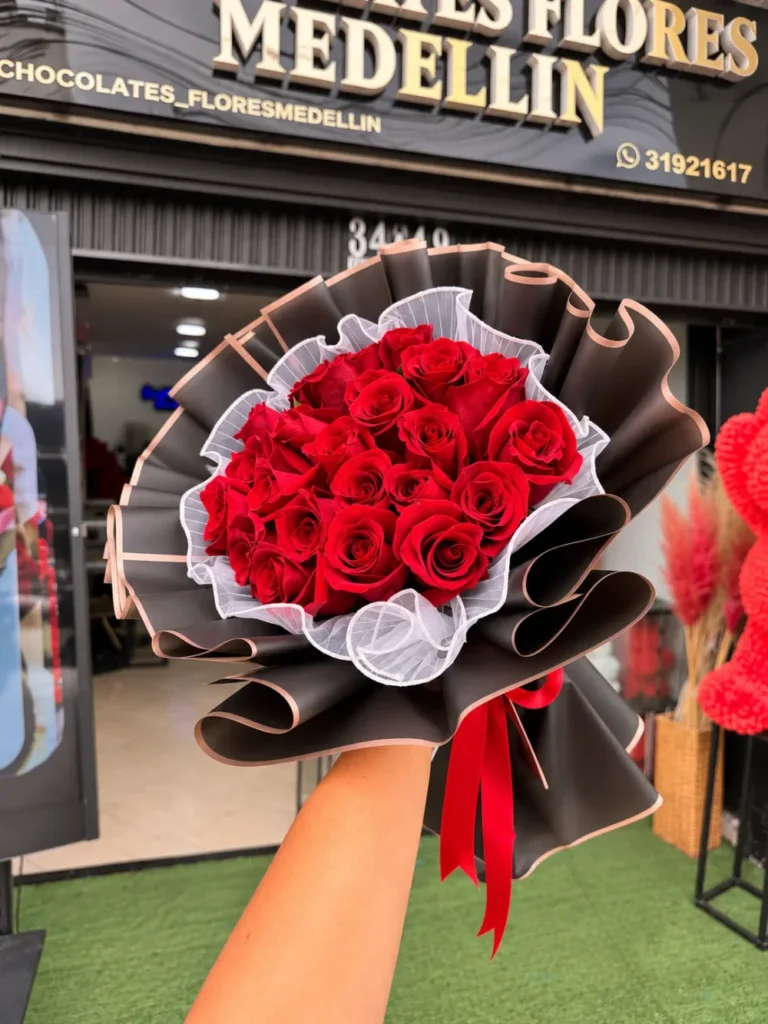
A mid-priced fresh bouquet, given once a month, adds up over a year to far more than a preserved rose that's still on the table two or three years later. If you want a frequent gesture, go natural; if you want a one-time gift that stays, the preserved rose is a better value than it seems.
When to choose each one
- Natural to surprise: birthdays, anniversaries, proposals, apologies. Anything that calls for impact on the day.
- Preserved to leave a lasting mark: a keepsake, a date worth remembering, someone who travels or can't care for flowers.
- Preserved also when the delivery is far away or uncertain: nothing happens to it if it takes a while to reach the recipient.
- Both when the budget allows: the bouquet for the day, the preserved rose for afterward.
How to care for a preserved rose
No water. Not even misting. It's the most common mistake and the only one that truly ruins it: water softens the treated petals and causes spots.
- Away from direct sunlight, which fades the color.
- Away from humidity: a bathroom is not a good spot.
- If it gathers dust, use a hair dryer on cool from a distance, or a soft brush.
- Don't squeeze it: the petals are flexible, but they won't spring back if you bend them too far.
What formats they come in
They're rarely sold loose, because part of their value is in the presentation. The usual formats:
- Under a glass dome: the most requested. It protects them from dust, the only thing that truly ages them, and looks beautiful on a nightstand.
- In a box: several roses together, ready to set on a shelf.
- In a frame: for hanging, when the idea is permanent decor.
- Loose, by the stem: for anyone who wants to create something of their own.
How to spot a good-quality one
The market has everything, and the difference doesn't always show in a photo. Here's what we look for:
- The feel. The petal should give softly. If it crackles or feels like cardboard, it's dried, not preserved.
- Even color. No stains or darker patches near the center, which give away a rushed dye job.
- Bloom size. A large, fully open rose preserves better; very small ones are usually second-grade flowers.
- The smell. It shouldn't smell like chemicals. If it smells strongly of alcohol or plastic, the treatment wasn't properly finished.
An advantage of buying them here
Colombia is one of the world's largest rose exporters, and much of that flower comes from the Bogotá savanna and Antioquia. That means the starting flower —the biggest factor in how a preserved rose turns out— is the same one exported to the United States and Europe, without weeks of travel behind it.
It's the same reason a fresh bouquet here lasts longer than one bought at a supermarket in the Northern Hemisphere: the distance between the farm and the recipient is measured in hours, not days.
Frequently asked questions
Do preserved roses have a scent?
No. The process removes the fragrance. Some come artificially scented, but that scent fades over the months.
Can they get wet or go in water?
No. Water stains and ruins them. They need no watering whatsoever.
How long do they really last?
Between one and three years in good conditions. Under a dome and out of direct sun, even longer. What changes over time is the shade, not the shape.
Are they natural or artificial?
Natural. They're real roses whose sap has been replaced with a preserving solution. No plastic or fabric involved.
Are they good for a long-distance gift?
Very much so: they don't depend on the person being home at a specific time or putting them in water right away.
We have them in seven colors. See the preserved roses or, if you prefer fresh, rose and chocolate bouquets.