A rose's color says something before the person even reads the card. It's not an exact science, and you shouldn't treat it as law, but there are widely shared readings, and knowing them avoids the classic misunderstanding: sending red when the relationship isn't there yet, or white when the occasion called for joy. This is the guide we use when someone messages us without knowing what to order.
Red: love, declared
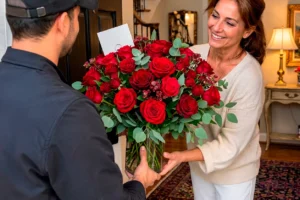
It's the most requested and the least ambiguous. A red rose says romantic love, desire and commitment. That's why it works for anniversaries, Valentine's Day and proposals, and also why it's worth thinking twice if the relationship isn't defined yet: the message comes through loud and clear, whether you like it or not.
Within red there are nuances almost no one considers. Deep red, almost wine, reads as more elegant and mature; bright red, as more passionate and youthful. If the bouquet is going to someone with understated taste, the darker shade is the safer bet.
Pink: affection without pressure
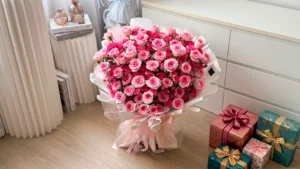
Pink is the one we recommend most when there's affection but no declaration: a birthday, a thank-you, the “I love you” of a long friendship, a gesture for mom. It conveys sweetness and admiration without the weight of red.
In a light shade it reads tender and soft, ideal for a new baby or someone recovering. In fuchsia it turns cheerful and festive, and holds up better at a party or in a brightly lit office.
White: respect and new beginnings
Purity, respect, fresh starts. It's the rose of weddings and also of solemn moments, including a farewell. On its own it can look cold; paired with pink or greenery it becomes elegant without feeling distant.
A use that works beautifully and few people consider: the white rose to say sorry. It says “let's start over” without the intensity of red, which in the middle of an argument can come across as over the top.
Yellow: joy and friendship
Yellow carries an unfair reputation for jealousy that hardly anyone holds anymore: it comes from Victorian symbolism and means nothing of the sort here. What it really says is friendship, energy and good news: a promotion, a graduation, a “so good to see you.”
For someone you care about without romance in the picture —a friend, a coworker, your sister— it's a better choice than red, which forces the other person to read into it. And on a desk it looks spectacular.
Orange and peach: enthusiasm
They sit between yellow and red: enthusiasm, admiration, budding attraction. They're excellent when you want something warm that isn't classic red, and they photograph beautifully, which matters more these days than we'd like to admit.
Peach, more muted, is one of the shades that pairs best with cream or kraft paper, and gives a very current look without shouting.
Blue: something you don't see every day
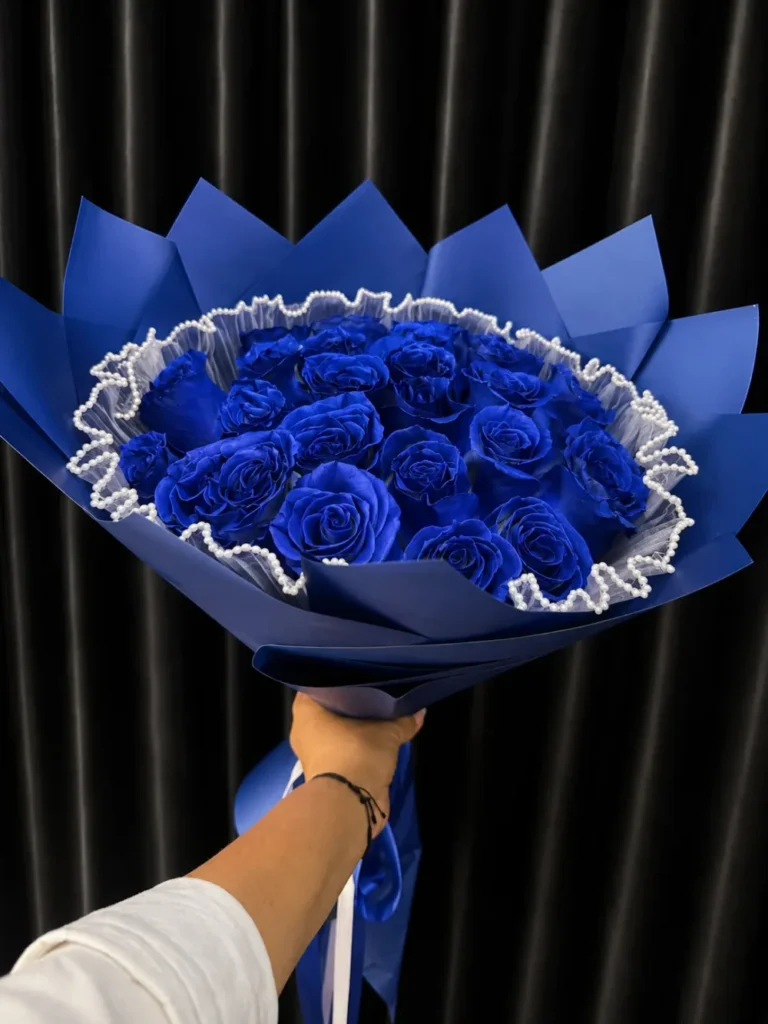
Blue roses don't exist in nature: roses don't produce the pigment for that color. What's done is to take a white export-quality rose and dye it, almost always by absorption through the stem, so the color rises evenly into the petals.
That's exactly why it stands for the unattainable, the different, the unexpected. It's the choice of people who have already given red many times and want to surprise, and it works best for someone with unconventional taste. See the 20 blue rose bouquet.
Color by occasion
- Anniversary: red, or red with white for something more elegant.
- Birthday: pink, yellow or mixed colors.
- Mother's Day: pink or peach; red reads as romantic and doesn't always fit.
- Graduation or promotion: yellow or orange.
- New baby: light pink or white.
- Apology: white, or pink if it wasn't serious.
- To surprise for no reason: blue. No one sees it coming.
What if I mix colors?
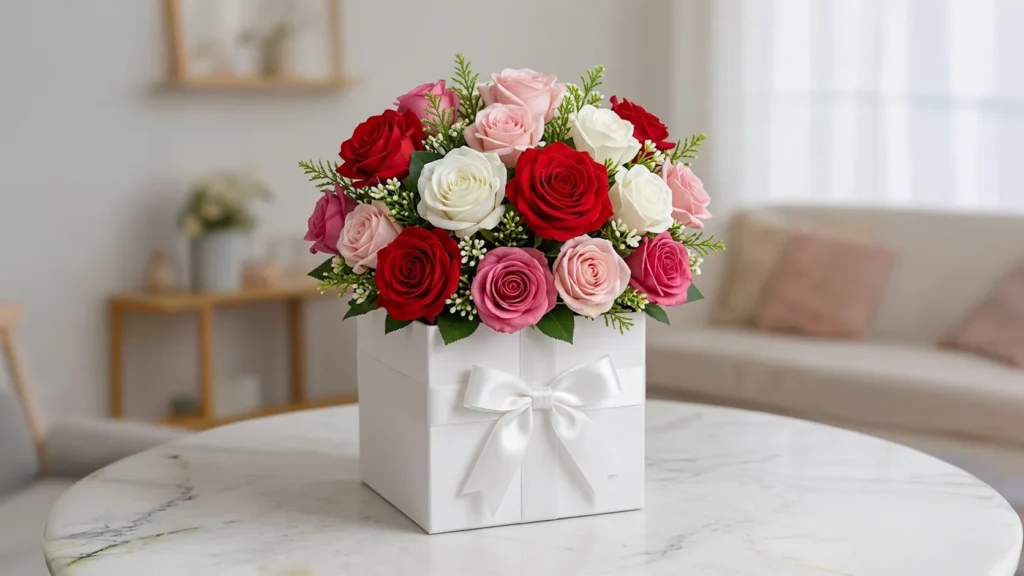
Mixing is fine and looks spectacular in large quantities, but it dilutes the message: a multicolor bouquet reads as a celebration, not a declaration. Our rule of thumb: if you want to say something specific, go with one color; if you want to celebrate, mix freely.
The combinations that work best are two shades from the same family —red with wine, light pink with fuchsia— or a strong color with white, which acts as a breather. Three strong colors together usually look messy unless the bouquet is very large.
The paper speaks too
It gets little thought and changes the result a lot. Dark paper makes light shades pop; cream softens red and makes it more elegant; kraft gives a natural feel that works with seasonal flowers. In all our bouquets you choose the rose color and the paper color, so you can fine-tune the message without changing products.
Color by who it's for
The occasion matters, but the relationship matters more. These are the pairings we use when someone tells us “it's for my boss” or “it's for my mother-in-law” and looks at us waiting for an answer:
- Partner: red if the relationship is official; pink or peach if it's new and you don't want to add pressure.
- Mom: pink, peach or a mix of light shades. Red reads as romantic and feels off.
- Friend: yellow, orange or a cheerful mix. Never red alone, unless you want to start a conversation.
- Colleague or boss: white with greenery, yellow or peach. Neutral, elegant and with no personal undertone.
- For him: deep red, wine or orange, and better in a box or heart format than a hand-tied bouquet.
- Someone recovering: light shades and open blooms, which brighten up the room. Avoid strong fragrances in hospitals.
How to order the exact color you have in mind
“Pink” can mean five different things, and that's where half of all disappointments begin. Shades depend on the rose varieties available that week, and the same variety shifts slightly in tone depending on the harvest and the season.
The surest way to get it right is to send us a reference photo on WhatsApp before you order. We'll tell you honestly whether that shade is available or which is the closest we have. It's a one-minute conversation that keeps a fuchsia bouquet from showing up when you were picturing dusty rose.
And if the color isn't what matters but the surprise is, tell us the occasion and let us choose: we almost always do better with what's fresh that day than with a fixed list of colors.
Frequently asked questions
Do yellow roses mean jealousy?
No. It's a Victorian reading that survives in a few sayings, but today the yellow rose is associated with friendship and joy. If the person knows the superstition and you're worried, add a card that clearly states the reason.
Are blue roses natural?
They're natural roses with applied color: they start as white roses and are dyed. The flower is real, with its normal texture and lifespan; the only thing added is the color.
What color is given at a funeral?
White, alone or with greenery. It's the respectful choice and the expected one. Avoid red, which in that context reads as romantic.
Does color affect how long the rose lasts?
Very little. What matters is the quality of the flower and the care. Dyed roses last practically as long as natural ones from the same batch.